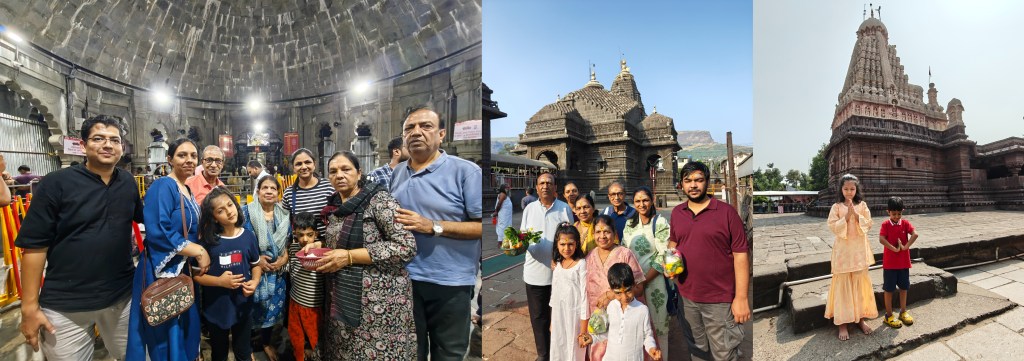
Three Jyotirlingas, ancient rock cut caves, hill forts and plenty of misal, thalipeeth and amrutulya tea – this road trip from Pune to Aurangabad shows Maharashtra at its most spiritual and its most delicious.
This blog post spans 9D/10N across several cities, centered around three Jyotirlingas of Maharastra: Bhimashankar, Trimbakeshwar and Grishneshwar, in the month of Oct 2026. This trip is a continuation to our yearly family road trip ritual through mystical mythological corridors of India. Previous road trips can be viewed here: Season 4, Season 3, Season 2, Season 1. It was a road trip which started from Pune and ended at Aurangabad. We took flights from Bangalore to Pune and back from Aurangabad.
After landing in Pune, we checked into an Airbnb villa in residential Kalyani Nagar, close to the airport. It was a quiet, comfortable base for a city day and practical for a large group like ours.
Day 1: Local Pune
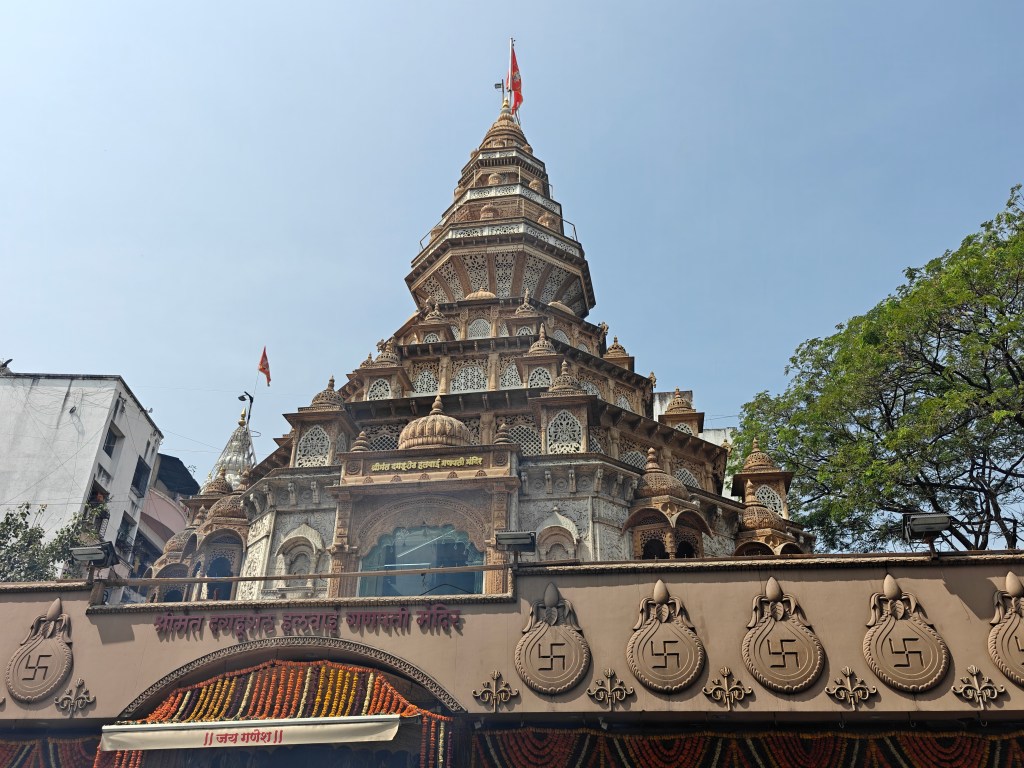
We started with breakfast at Katakirr Misal and Cafe Goodluck, two Pune classics. Then we visited the Dagdusheth Halwai Ganpati Mandir and Kasba Ganpati, which is considered the guardian deity of Pune. We booked the Dagdusheth darshan online, which saved us a lot of waiting.
Lunch was a traditional Maharashtrian thali at Durvankur Dining Hall. Post that, we picked up Shrewsbury biscuits from Kayani Bakery, one of the last surviving Irani bakeries in Pune, and its biscuits are so popular that people queue up for them before they sell out.
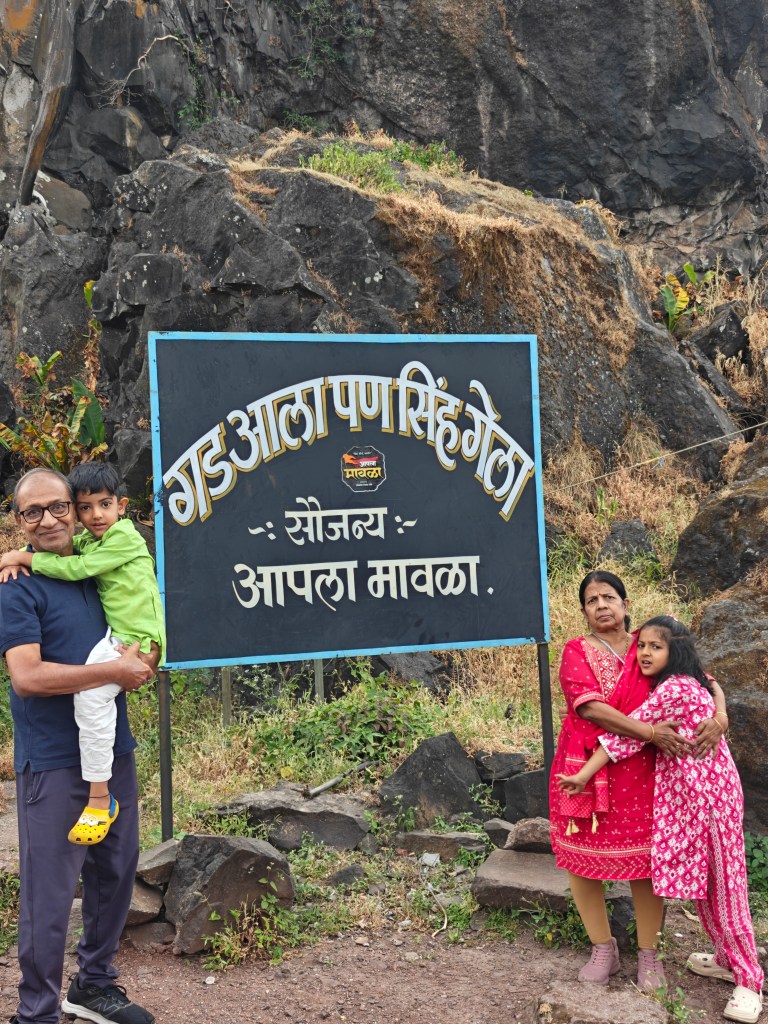
We then drove up to Sinhagad Fort, followed by a light hike up the stairs, and enjoyed the views over the hills. A pleasant treat awaited Moli on the way up – fresh curd served in a clay pot by a local vendor!
For dinner, we had split opinion and we settled on a place which served both north indian food as well as local delicacies. For me, it was a simple and local meal, pithla bhakri, which summed up the day!
Day 2: Drive to Bhimashankar Jyotirlinga
The day started with a sumptuous breakfast of Indori Poha, Crispy Jalebis and Kachoris. Tea lovers as we were, the hunt started for Puneri Chaha next and soon we found an Amruttulya, serving a traditional and immensely popular style of sweet, spiced milk tea that has originated in Pune.
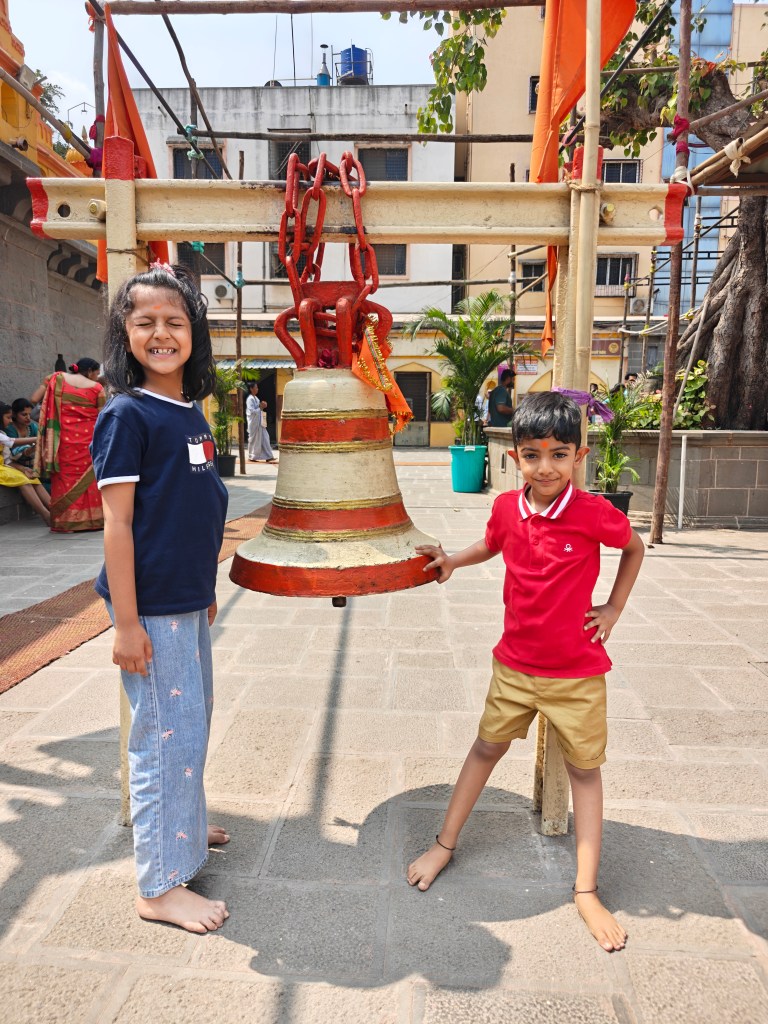
We drove towards Bhimashankar, stopping at the Chintamani Temple in Theur, one of the eight Ashtavinayak Ganpati temples around Pune.
Bhimashankar sits deep in the Sahyadri forests, so the drive gets greener and quieter as you progress. We reached in time for the night darshan and more so sandhya aarti, when the temple is calm and far less crowded.
We stayed at MTDC Bhimashankar, which is a minimal facility and arguably one of the best places to stay in vicinity. The area is forested with limited facilities and zero mobile network – so go in with realistic expectations and carry essentials.
Day 3: Morning Darshan & Drive to Trimbak
Some of us went back for morning darshan at Bhimashankar, when one can actually touch the deity. Having stayed nearby, we could go early before the crowds built up.
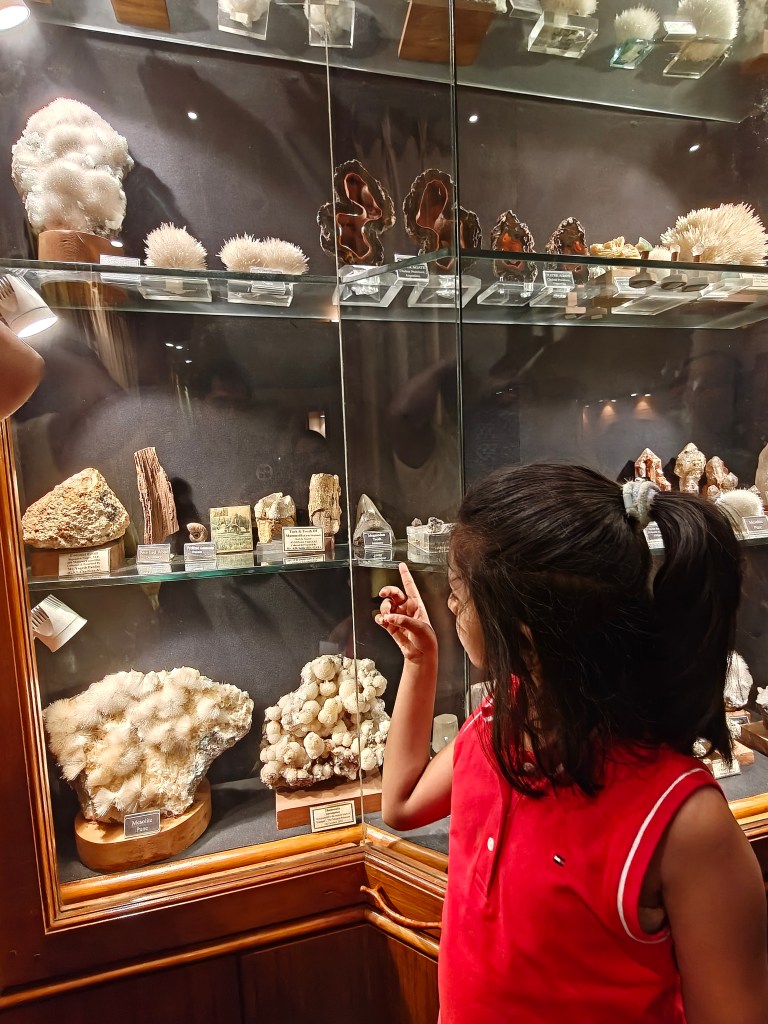
After that we started the drive to Trimbak. On the way we stopped at the Gargoti Gem and Mineral Museum, a good break for the kids. Gargoti Museum in Sinnar is known for its large private collection of minerals and gemstones, especially zeolites, a group of crystals found in the volcanic Deccan rock around Nashik, and it is often described as one of the best of its kind in India. The collection boasts of rocks from moon and mars, dinosaur egg and bone fossils and billions of years old meteorite!
We reached Trimbak by late evening and checked into an Airbnb villa, very close to the temple. The group was exhausted after a long day and the collective call was made to skip the evening darshan.
Day 4: Trimbakeshwar Jyotirlinga
Trimbakeshwar is arguably the most mysterious of the twelve Jyotirlingas, situated at the foothills of the Brahmagiri Mountain, which is also the origin of the Godavari river. The deity gets a constant flow of water from the river and is always submerged below the ground, very unusual for a linga!
We had booked VIP darshan online, which made the visit smooth and helped cut the serpentine queues.
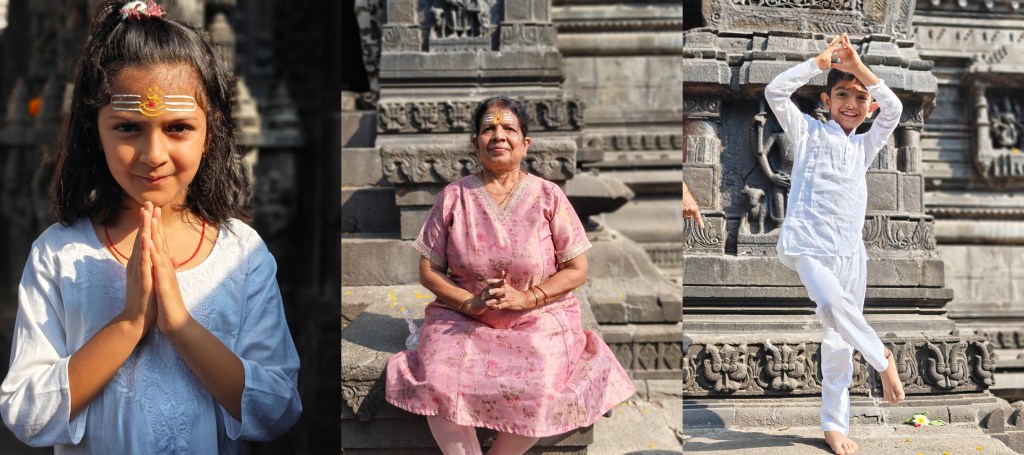
Later in the day, we visited the Panchavati area in Nashik, which is linked to the Ramayana, and is the starting place for the Kumbh Mela. Panchavati takes its name from five (pancha) banyan (vata) trees, and is believed to be where Ram, Sita and Lakshman lived during their exile, including the spot where Lakshman is said to have cut off Surpanakha’s nose. Sita Gupha is a small cave in Panchavati, reached through a narrow, low tunnel that visitors have to duck and squeeze through, and it is believed to be where Sita stayed and prayed during the exile, just before she was abducted by Ravana.
We saw the Lakshmi Narayan temple, the Lakshman-Surpanakha spot, Sita Gupha and the Kalaram Mandir. We skipped the evening Goda Aarti at Ramkund Ghat, as there was hardly any water at the time of our visit. The day was concluded with another local eatery, Shree Rajbhog Thali, where we had dinner.
Day 5: Pandavleni Caves & Sula Vineyards
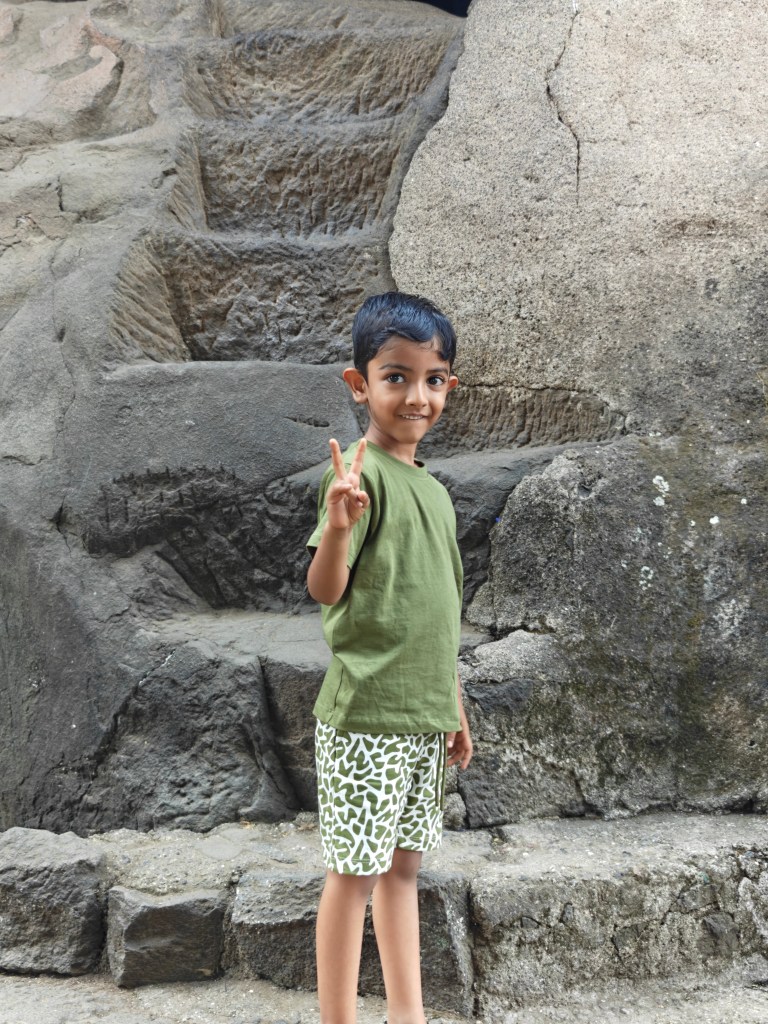
We spent the first half of the day at the Pandavleni Caves, a set of ancient rock-cut Buddhist caves on a hill. It involves a fair bit of climbing, but the kids and elderly managed well and enjoyed it thoroughly.
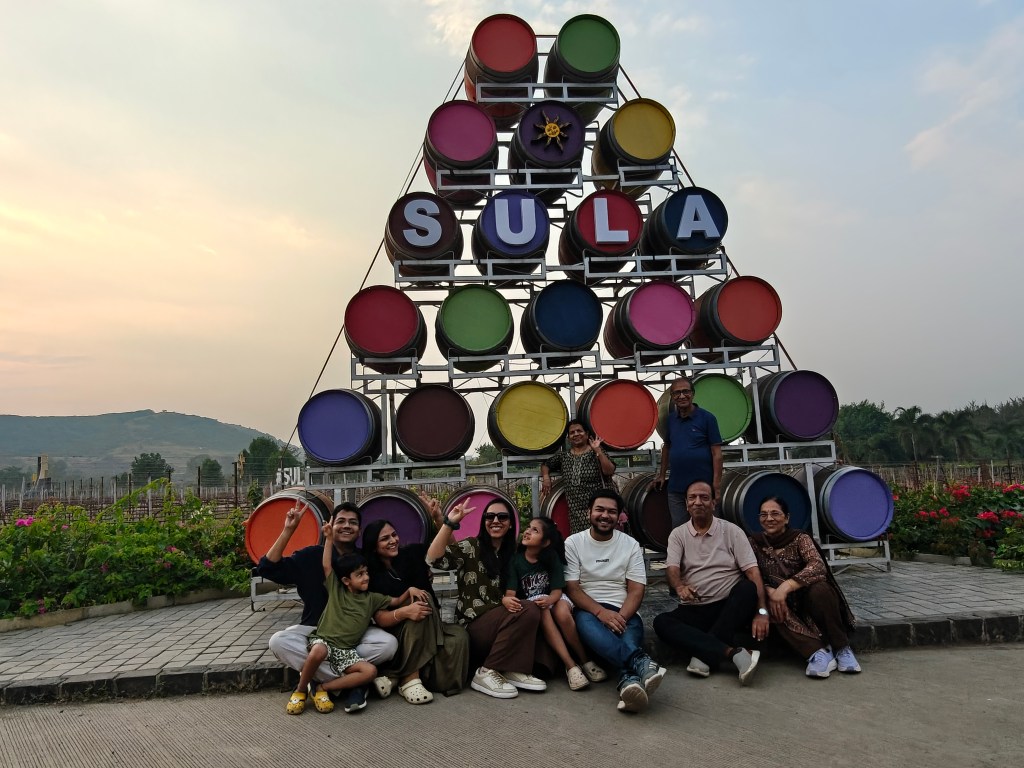
In the afternoon we headed to Sula Vineyards, where we did wine tasting, took photos among the vines and had dinner at Rasa, their restaurant.
Day 6: Gondeshwar Temple and Shirdi
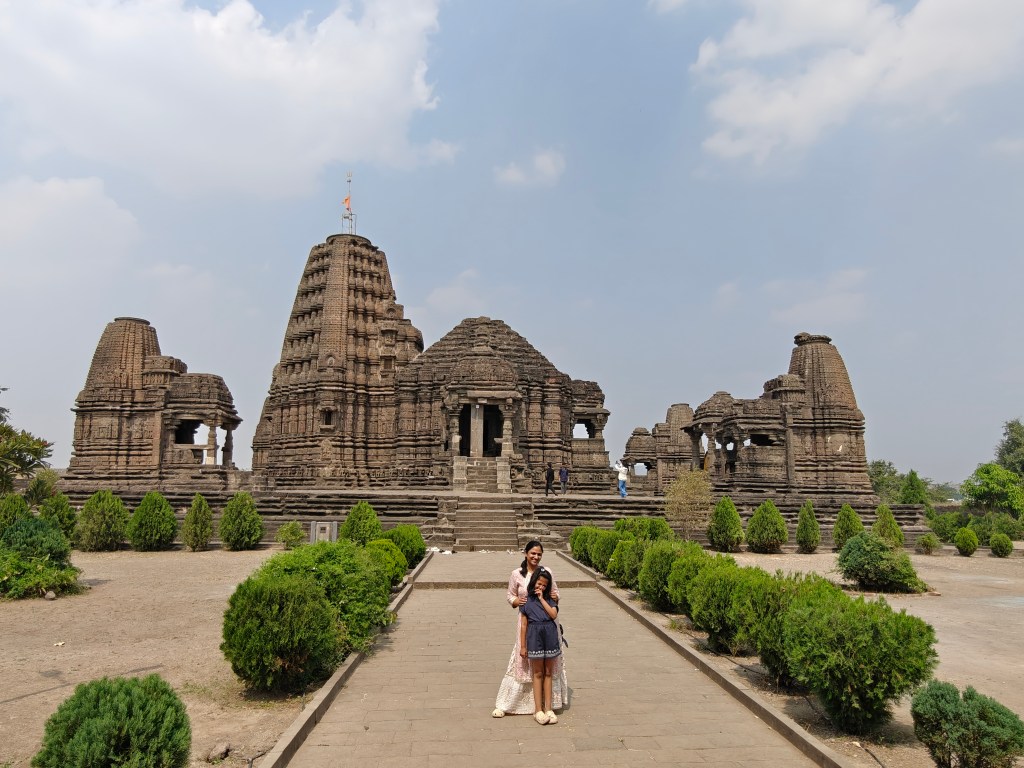
We stopped at the Gondeshwar Temple in Sinnar, outskirts of Nashik. It is an 11th century old stone temple built in the Hemadpanthi style, with detailed carvings.
Hanu’s sense of timing never disappoints. This time the urge struck right inside the temple, where there was not a toilet in sight, and the divine intervention we needed was of a very different kind!
We then went on to Shirdi and checked ourselves in at Sai Baba International Hotel. Our darshan was at 8pm and as we had few hours left, we roamed around the shops in the vicinity of the shrine and didn’t miss the opportunity to have another cup of Amruttulya tea.
Inside, the deity is the life-size marble statue of Sai Baba, seated on a throne in a relaxed pose and draped in fresh flowers and bright robes. His home, Dwarkamai, is the old run-down mosque where Sai Baba lived for decades, and the sacred fire (dhuni) he lit there is said to have been kept burning ever since, with its ash given to devotees as a blessing.
The dinner was simple at the temple trust’s dining hall which is apparently largest of its kind in world!
Day 7: Shirdi Theme Park, Shani Signapur & Drive to Aurangabad
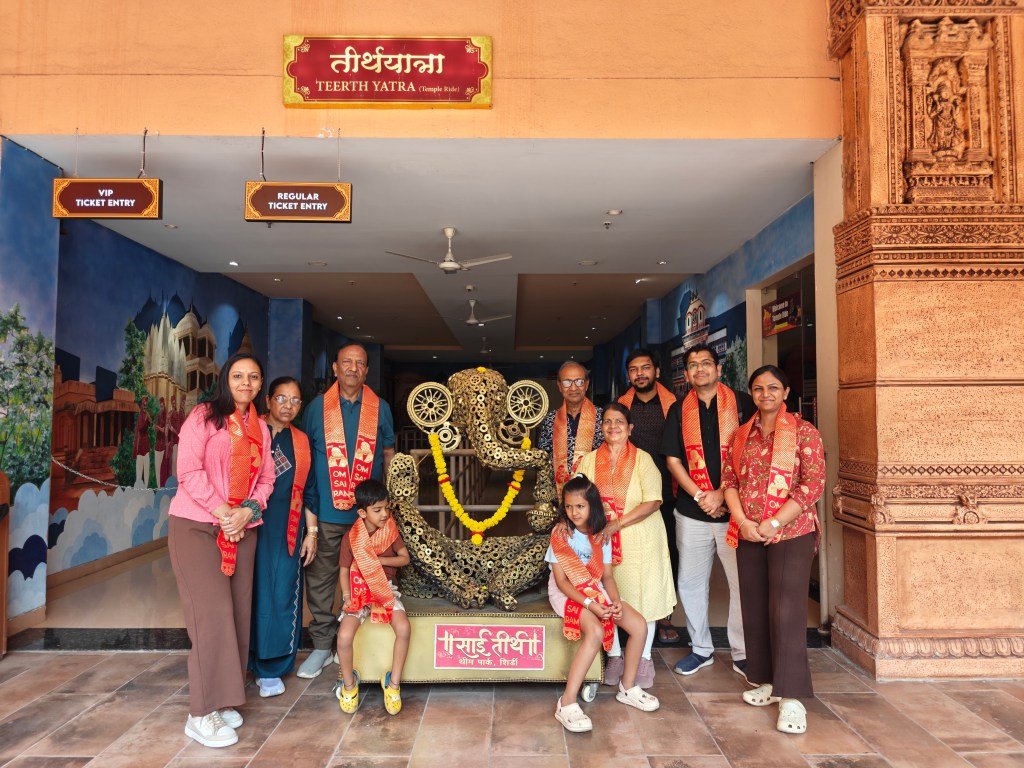
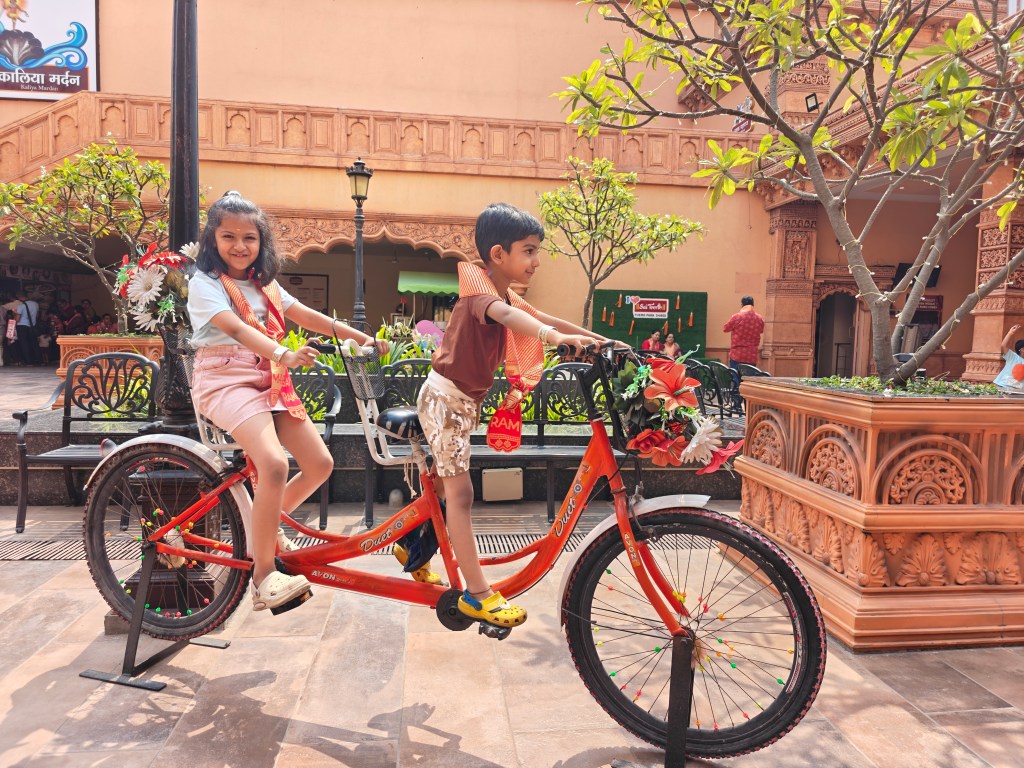
This was a long day. We spent the morning and most of the afternoon at the theme park in Shirdi, which the kids enjoyed after several days of darshans and long drives. It is a well managed theme park with plenty of interactive 5D shows to keep visitors of all ages engaged.
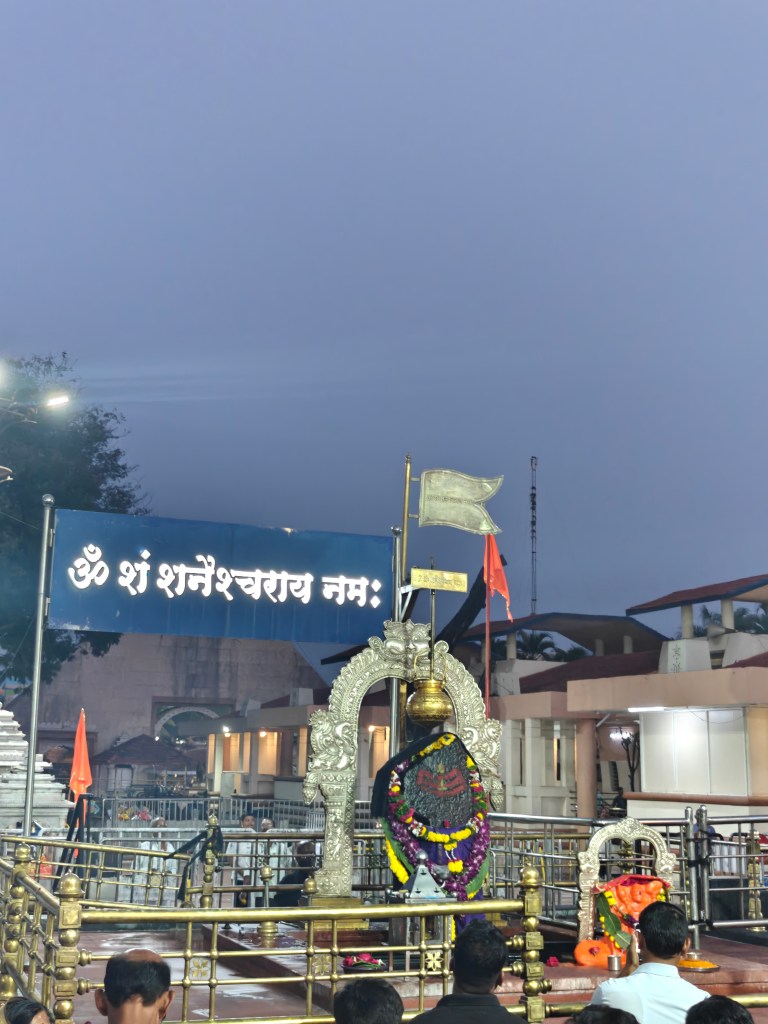
We then drove to Shani Shingnapur, where the deity himself is a tall black stone slab standing in the open, with no idol or roof. This village houses have no doors, only open frames, and shops and even the bank are said to go without locks, as locals believe Lord Shani protects them from theft. We reached just in time for the evening aarti.
We continued to Aurangabad and checked into Fern Residency late in the evening.
Day 8: Grishneshwar Jyotirlinga
We began at Grishneshwar Temple, a red stone temple and the last of the twelve Jyotirlingas. We had arranged our puja through a sangh (Sumit Pandit), who guided us through the temple. Here men must remove their shirts and vests before entering the sanctum.
Next to it are the Ellora Caves. The highlight is the Kailash Temple, an entire temple carved out of a single rock from the top down. As legend says, queen of the Rashtrakuta king took a vow that she would not eat until she saw the top of the new temple. If the temple had been built from the ground up, she would have waited for years. The builders therefore carved it from the top down, so the tip appeared first and she could end her fast.
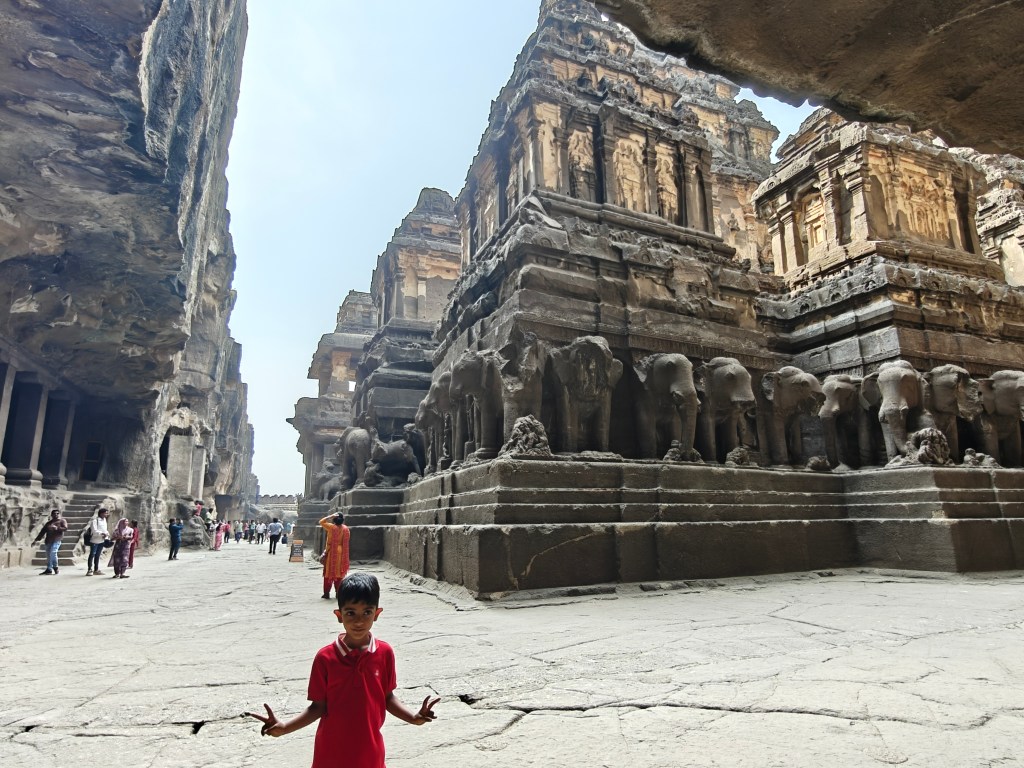
After lunch we went to Khuldabad to see Aurangzeb’s grave, which is surprisingly simple and in line with the frugality the emperor practised. Next was Panchakki, which means “water mill” in Hindi, built to grind grain for pilgrims visiting the dargah of the Sufi saint Baba Shah Musafir. Its flour mill is powered by water carried through underground clay pipes from a spring several kilometres away, so it works without any animal or human power to this day.
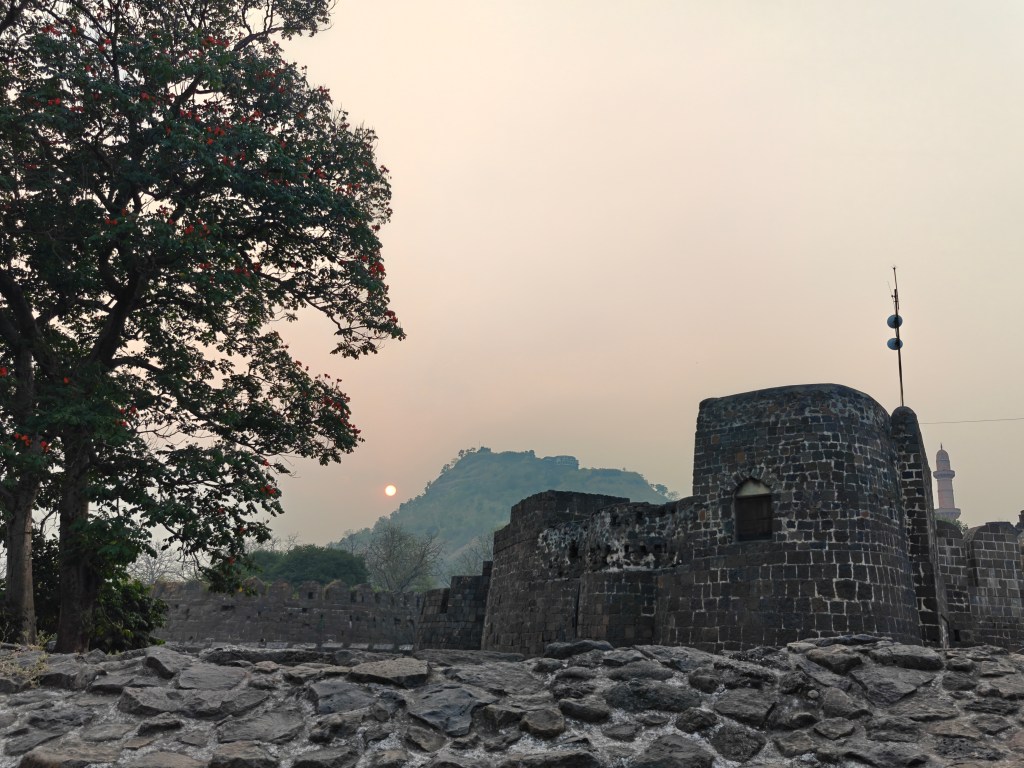
We ended the day at Daulatabad Fort for sunset, a hill fort with sweeping views and a dramatic climb. We did a short trek only up to Chand Minar.
Our dinner was at Bhalla Chat Centre, in the bursting narrow market area of aurangabad, followed by kulfi at Bombay Bandra famous Falooda shop.
Day 9: Local Aurangabad
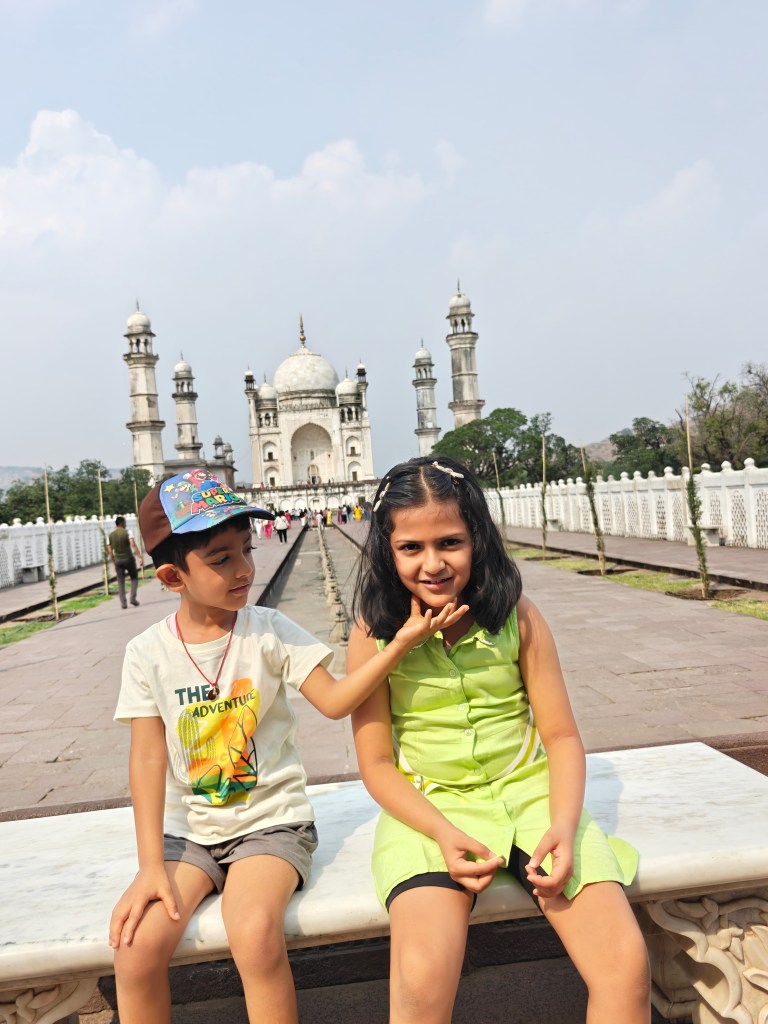
On our last day we saw Bibi ka Maqbara, often called the “Taj of the Deccan”. It was built by the son of the Mughal emperor Aurangzeb, in memory of his mother, and it closely copies the design of the Taj Mahal, although it is smaller and uses less marble.
After having lunch at another thali restaurant bhoj thali, we went shopping at Nirala Bazar for Paithani silk sarees and Himroo shawls, both local specialities. We visited Shamim Attar and Perfumes to pick up some scents. Attar-making is an old tradition in India, and a small bottle can last for months because it is concentrated oil, not a spray. We finished getting souvenior snacks packed at Uttam Mithai Bhandar, mostly some farshan, bakarwadi and batisa sweets.
Food: What We Tried
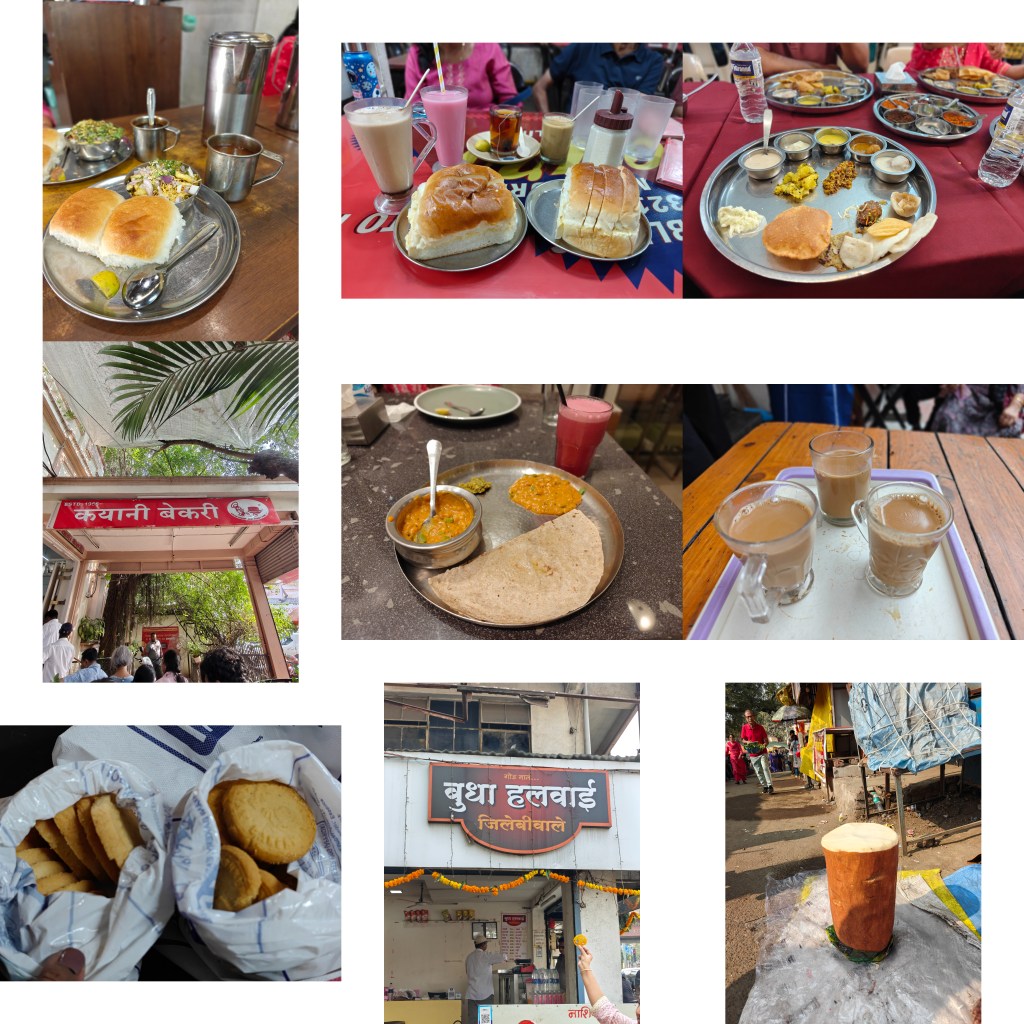
Maharashtra is great for food; breakfast and snacks were often the best part of the day. We tried sabudana vada, poha, thalipeeth, imarti and moong bhajiye, misal pav, solkadhi, kokam sharbat, bun maska, pithla bhakri, Shrewsbury biscuits from Kayani Bakery, and fafda jalebi at Budha Halwai.
Tea is a culture in itself here. Amrutulya tea shops are everywhere, and a cup is never far away.
GB Hacks
- Road conditions are excellent, and most of the route is on highways.
- Book VIP darshan online wherever possible, as it saves a lot of time.
- Most temples have sanghs (groups of priests) who can arrange pujas and guide you through the temple.
- Stay close to the major temples. You can then attempt a late-evening darshan and an early-morning one.
- At Bhimashankar, carry essentials, as options in the forest area are limited.

